Unleashing your inner athlete doesn’t require a pricey gym membership or fancy equipment. In fact, some of the most effective and sustainable workouts can be achieved using nothing more than your own bodyweight, all from the comfort of your home. This guide explores the power of bodyweight home fitness, providing you with the knowledge and tools to transform your health and physique, one rep at a time.
The Power of Bodyweight Training
Bodyweight training has surged in popularity for good reason. It’s accessible, versatile, and incredibly effective for building strength, improving cardiovascular fitness, and enhancing overall well-being. Let’s delve into why it’s such a fantastic option for home fitness.
Accessibility and Convenience
- No equipment needed: This is the biggest advantage. You can start immediately without investing in expensive equipment.
- Train anywhere, anytime: Home, park, hotel room – your body is your gym.
- Minimal space required: You don’t need a dedicated room; a small area is usually sufficient.
Strength and Muscle Development
- Compound exercises: Many bodyweight movements, like squats, push-ups, and lunges, engage multiple muscle groups simultaneously, promoting balanced strength development.
- Progressive overload: As you get stronger, you can increase the difficulty of exercises by modifying them (e.g., incline push-ups to decline push-ups) or adding repetitions.
- Functional strength: Bodyweight exercises improve your ability to perform everyday activities with greater ease and efficiency.
Cardiovascular Benefits
- Increased heart rate: Performing circuits of bodyweight exercises can elevate your heart rate, providing cardiovascular benefits similar to running or cycling.
- Improved endurance: Regular bodyweight training enhances your muscular endurance, allowing you to perform activities for longer periods without fatigue.
- Calorie burning: Depending on the intensity and duration, bodyweight workouts can burn a significant number of calories, contributing to weight management. A 150-pound person can burn approximately 400-500 calories per hour doing a moderate-intensity bodyweight circuit.
Building Your Bodyweight Home Workout Routine
Creating a well-rounded bodyweight routine is key to maximizing results and preventing plateaus. Here’s how to design a program that suits your fitness level and goals.
Assessing Your Fitness Level
- Beginner: Focus on mastering fundamental movements with proper form. Start with fewer repetitions and sets.
- Intermediate: Increase repetitions and sets, and introduce more challenging variations of exercises.
- Advanced: Incorporate advanced movements like plyometrics, single-leg exercises, and handstand variations.
- Self-assessment: Honestly evaluate your current abilities. Can you comfortably perform 10 push-ups? 20 squats? This will guide your starting point.
Sample Bodyweight Exercises
- Lower Body: Squats, Lunges, Glute Bridges, Calf Raises, Single Leg Deadlifts
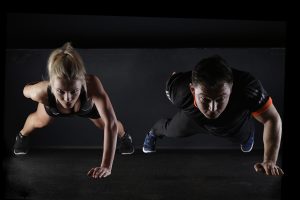
- Upper Body: Push-ups (various hand placements), Dips (using a chair or sturdy surface), Plank Variations, Pull-ups (if you have a bar)
- Core: Plank, Crunches, Leg Raises, Russian Twists, Bird Dog
- Cardio: Jumping Jacks, Mountain Climbers, Burpees, High Knees
Structuring Your Workout
- Warm-up (5-10 minutes): Light cardio (jumping jacks, high knees) and dynamic stretching (arm circles, leg swings).
- Workout (20-45 minutes): Choose 3-5 exercises per workout, targeting different muscle groups. Perform 2-3 sets of 10-15 repetitions for each exercise.
- Cool-down (5-10 minutes): Static stretching, holding each stretch for 30 seconds.
- Example Workout Schedule:
Monday: Upper Body (Push-ups, Dips, Plank)
Wednesday: Lower Body (Squats, Lunges, Glute Bridges)
Friday: Core & Cardio (Crunches, Leg Raises, Burpees, Mountain Climbers)
Progressing Your Bodyweight Exercises
To continually challenge your body and see results, it’s essential to progressively overload your workouts.
Modifying Exercises for Difficulty
- Increase Repetitions: Gradually increase the number of repetitions you perform for each exercise.
- Increase Sets: Add more sets to your workout routine.
- Change the Angle: Elevate your feet for push-ups to make them harder. Use a chair for incline push-ups to make them easier.
- Slow Down the Tempo: Performing exercises with a slower tempo increases the time your muscles are under tension, making them more challenging. Try counting to 3 on the way down in a squat, pausing for 1 second at the bottom, and counting to 3 on the way up.
- Add Resistance: While the focus is bodyweight, consider using resistance bands for added challenge.
Introducing New Variations
- Push-up Variations: Diamond Push-ups, Wide-Grip Push-ups, Plyometric Push-ups
- Squat Variations: Pistol Squats (single leg), Jump Squats, Bulgarian Split Squats
- Lunge Variations: Reverse Lunges, Walking Lunges, Curtsy Lunges
Incorporating Plyometrics
- Plyometrics are explosive movements that help improve power and agility.
Examples: Jump Squats, Box Jumps (using a stable platform), Plyometric Push-ups (pushing off the ground to create a clapping motion).
- Start with low-impact plyometrics and gradually increase the intensity as you get stronger.
Staying Motivated and Consistent
Consistency is key to achieving your fitness goals. Here are some tips to stay motivated and make bodyweight training a sustainable part of your lifestyle.
Setting Realistic Goals
- Start small: Don’t try to do too much too soon.
- Make your goals specific and measurable: Instead of saying “I want to get in shape,” say “I want to be able to do 15 push-ups in a row by the end of the month.”
- Track your progress: Record your workouts and monitor your improvements. This will help you stay motivated and see how far you’ve come.
Finding an Accountability Partner
- Working out with a friend or family member can help you stay motivated and accountable.
- Share your goals and support each other’s progress.
- Consider joining an online fitness community for support and encouragement.
Making it Enjoyable
- Listen to music or podcasts during your workouts.
- Vary your routine to prevent boredom.
- Find exercises that you enjoy and incorporate them into your routine.
- Reward yourself for reaching milestones (e.g., a new workout outfit, a healthy treat).
Conclusion
Bodyweight home fitness offers a powerful and accessible path to improved health and fitness. By understanding the principles of progressive overload, exercise variation, and consistent effort, you can transform your body and achieve your goals without the need for expensive equipment or a gym membership. Embrace the simplicity and effectiveness of bodyweight training and unlock your full potential. Remember to listen to your body, prioritize proper form, and enjoy the journey!